What Does It Really Mean To Be An Artist?
This is something I think about a lot because the longer I do this, the more I realize that becoming an artist—much like a child growing up and maturing into adulthood—is a layered, years-long evolution of epic proportions. It’s a kind of paradox in which you are always, at once, having to let go and also reach for more.
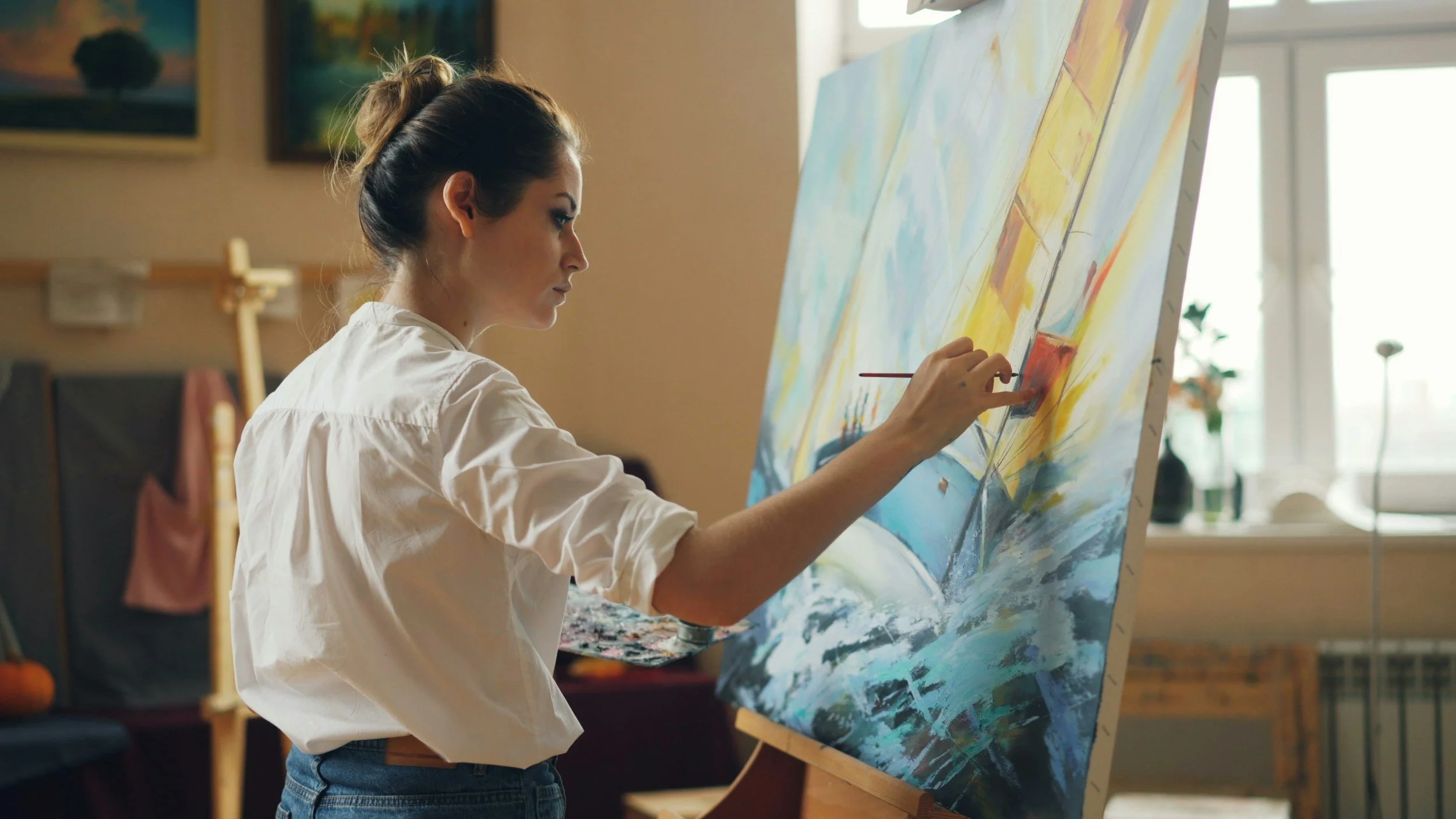
As much as we all want a formula, art doesn't have one – not really, not for a process, or a method, or a career path – because it's about expression, and because it's about you, and you are entirely unique. What works for you won't work for me, not in a formula sort of way.
I often tell people who struggle to embrace the label of artist that if they create things, they are an artist. You’re allowed to claim the title and believe it for yourself, no matter what stage you’re in. If you don’t, you’ll find yourself constantly looking to others—or to your work—to affirm it for you, and that’s a trap we all know too well.
But on the other hand, I’m discovering that alongside “artist” there’s a larger, more engaging endeavor —Artist with a capital “A.” That is an entirely different journey.
“Art is a kind of innate drive that seizes a human being
and makes him its instrument.”
Carl Jung
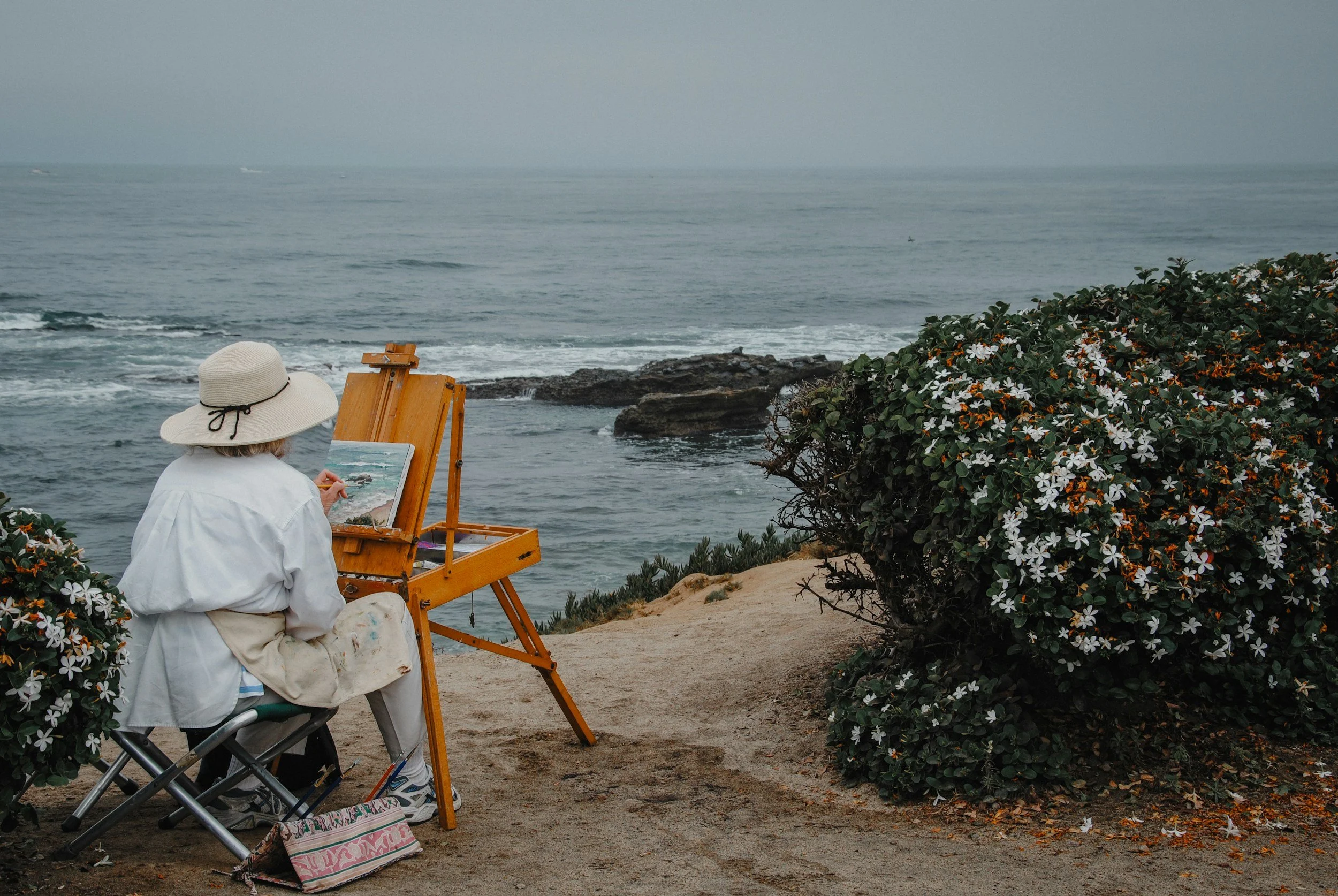
Becoming an artist might begin with the longing to make beautiful paintings, but eventually the focus shifts from the outcome to the process itself.
Over time, you start to sense that it’s really about the process of your own becoming, and the artwork is simply a byproduct of that ongoing transformation.
Embarking on the journey of being an Artist is a choice—whether conscious or not—that, once made, you can’t simply walk away from (even if you try). It infiltrates your thoughts and your way of moving through the world, both inside and outside the studio. Over time, it becomes less about the finished product and almost entirely about the ongoing process of relating to life through a creative lens. And this way of thinking, moving, deciding, and relating to yourself inevitably produces work that is more authentic, more personal, and more expansive than any original desire to “make something pretty” could ever allow.
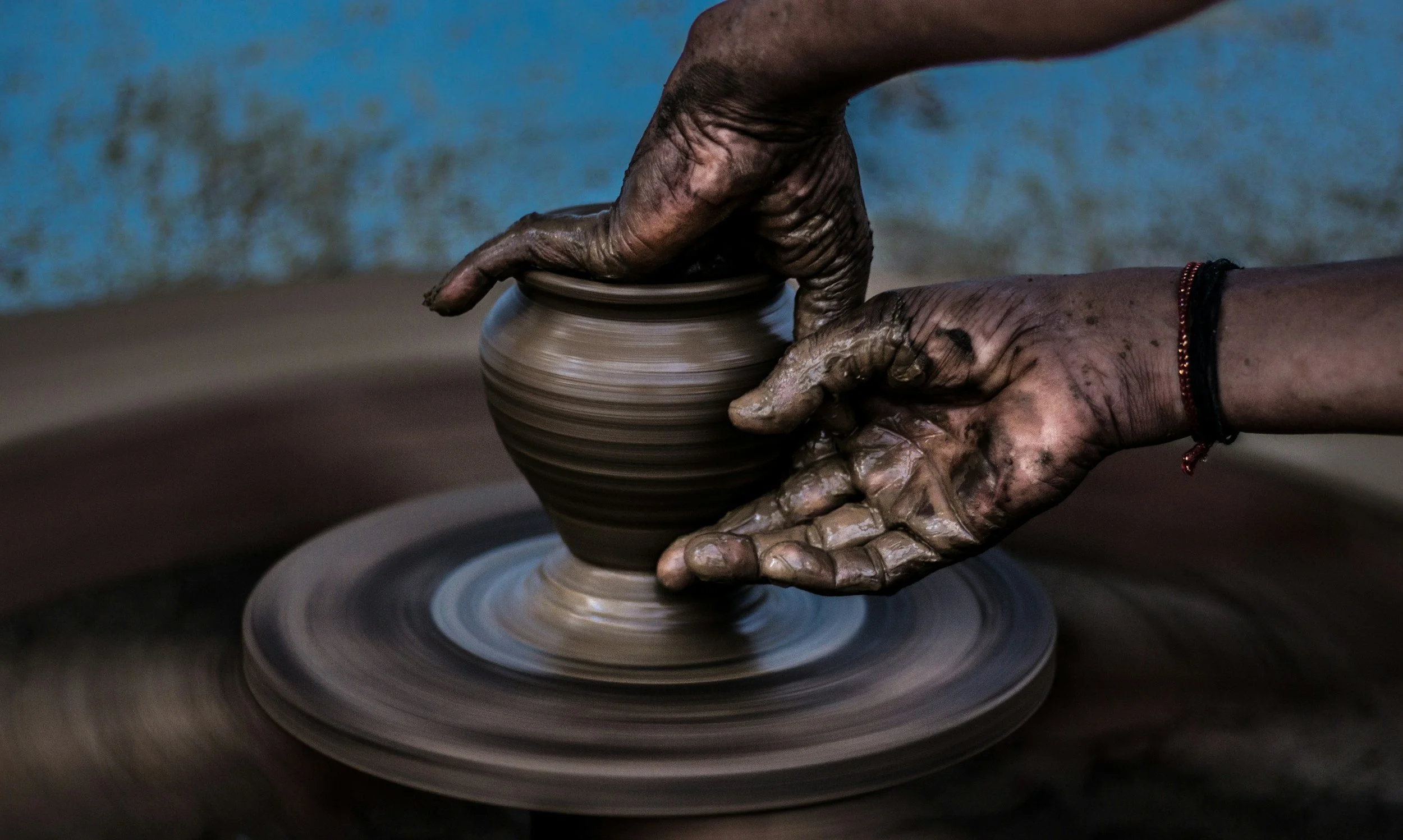
“Art is not a thing; it is a way.” Elbert Hubbard
When artists tell me they feel deeply insecure about the quality of their work, or frustrated that their paintings aren’t turning out as they hoped and the whole enterprise feels more taxing than fulfilling, I recognize that they—like so many of us—are in the midst of what mythologist Joseph Campbell would call the Hero’s Journey. They’ve been lured into the forest by a pretty object, only to find themselves on a meandering path full of personal challenges that seem to lead nowhere, unsure why they’re even there.
It’s a journey that only begins to make sense once you stop searching for the pretty object that drew you there to begin with; it was never about the pretty object, but about something else. What is it? Why do you want to be an artist?
What Changes When You Approach Your Work from the Inside Out?
For many years, I thought I wanted to stay on the surface of things, but in truth, what I longed for was the deeper, transformative experience.
Shifting our thinking from being an artist to being an Artist isn’t easy, because it can feel as though we’re prioritizing things other than what we believed we needed most—like the desire for beautiful paintings or the pull of outward validation and recognition. But in truth, it’s less about letting go of those things and more about discovering where our deepest allegiances actually lie.
With some honest examination (and a bit of digging), we may realize that what we assumed was most important to us isn’t truly at the top of the hierarchy. For the first time, we may begin to see that what we thought was our highest priority is actually secondary to the deeper reasons we feel called to live as an Artist.
But Where Do We Start Digging?
Some preliminary questions to get you started might be:
If only one could lead, would you choose the pursuit of beauty in your work, or the growth that leads you toward who you truly are?
Will you define yourself by the beauty of what you create, or by the depth of your relationship to your creative self and the honesty of its expression?
In all honesty, do you trust the opinions of others about your work more than the quiet knowing of your own? Can you even hear your own opinion?
Of course, we don’t have to choose just one or the other; life is rarely either/or. But I’ve discovered that there’s a natural hierarchy of allegiances, and when they fall out of order, they create resistance and a drag on your creative flow. When you can identify the right order—and by “right,” I simply mean the order your creative nature responds to—the whole experience changes. It’s the difference between trudging through the airport dragging suitcases behind you, and stepping onto the moving walkway where resistance drops away, your pace becomes fluid, and it takes less energy to accomplish far more.
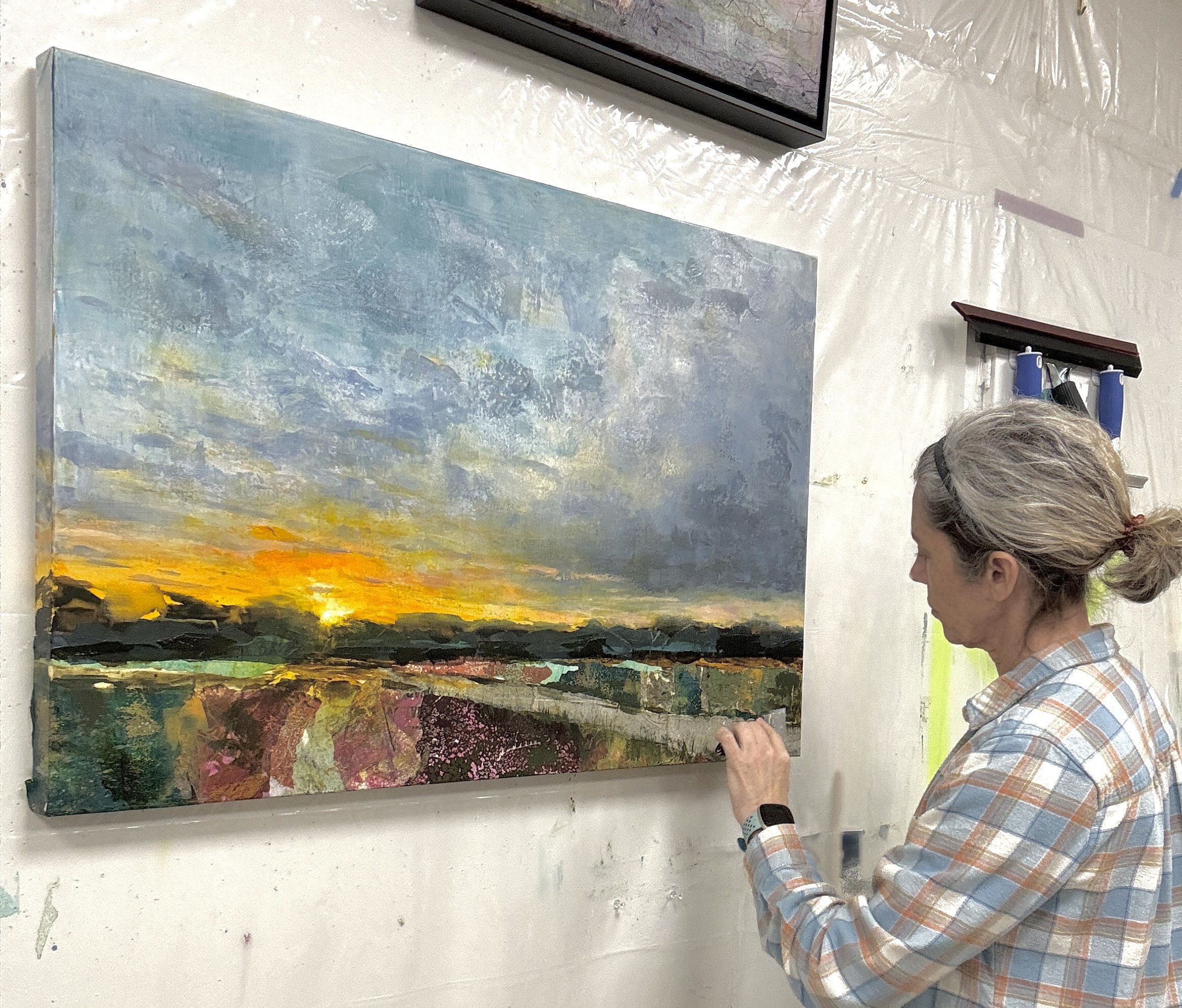
This is a recent commission for which I elected to do 2 versions, even though the clients will choose just one of them; doing 2 brings my stress level down. It’s not very practical, but I get a better result. This is a perfect example of something I would not have previously chosen before I understood my hierarchy of allegiances.
What Does This Look Like On A Practical Level?
This will look different for everyone, but here’s how it unfolded for me two years ago.
For years, I struggled to make a living selling paintings. Then in 2023, through YouTube, I connected with artists who began asking for a class—and in the process, I discovered how much I genuinely loved teaching. It felt natural, energizing, and even supported my own studio work. But after a year, I realized I was devoting about 90% of my time and attention to teaching. It made perfect sense on paper—it brought in far more income than my paintings—but something unexpected began to happen: I felt stalled, empty, unmoored. After some reflection and a lot of writing, I realized something important:
What makes practical sense doesn’t always make creative sense.
My creative hierarchy was out of order.
My artwork, and more specifically, my practice was the source of anything else I wanted to do. It didn’t matter that the money came from something else, the practice was the engine.
The key is identifying where the energy is generated. Whatever you determine that source to be must come first.
When you locate the place where your energy is created and consistently make it the priority, things begin to flow. And if you’re not sure yet, make your best guess—and experiment.
You’ll know when the central piece is truly in the central place—something “clicks,” everything feels lighter, the flow returns, and a natural sequence begins to reveal itself.
There’s no end to the hierarchies we can re-examine. In the last 6 months, I’ve been contemplating the idea of removing the expectation that I have to sell my work from my relationship to my practice. When I first had the thought, it literally shocked me because for so long I had only thought of paintings in terms of ‘things I intend to sell’, even though I’m well aware that plenty of artists create without selling a thing.
Don’t get me wrong—I love selling my work. But when I think about creating, what truly sits at the center? Until recently, that center was occupied by sales, as if they were the purpose of the work. Stepping back, I could suddenly see how untrue that was. The purpose of my work is something else entirely. Exactly what that is will be the focus of my reflection for awhile.
Removing the label of “money-maker” from my paintings has changed everything. At first, the shift was subtle, but now I can feel it deeply. I can think more clearly about what I want because my process is no longer clouded by what I imagine buyers might want. As a result, I follow my creative impulses more readily, hear them more clearly, and enjoy the becoming of each piece without thinking about what it might bring me financially. Interestingly, I still sell work, so apparently locating this out of place hierarchy not only freed me up, but didn’t disturb my sales at all. It may have improved them.
This doesn’t work for everyone, nor does it need to. That’s really the whole point. Being an Artist requires that you figure out what that means for you. The formula doesn’t exist and never has.
So here it is in a nutshell:
Every artist has a way their creative self wants and prefers to work, and what it needs to thrive.
Which is why every artist can benefit from paying attention to their own hierarchy and asking whether it’s truly aligned with their creative center.
Give it a try and see what happens…
If you would like to receive emails with material like this, you can sign up here.
Join me on my YouTube Livestreams where I paint and talk about the fundamentals of a healthy art practice.