“Knowing yourself is the beginning of all wisdom.”
Aristotle
As I write this, we’ve just finished the 2025 Holiday season and all that’s left is the welcoming of 2026. Like most people, I come out of the holidays feeling a little sluggish — full of cheese (and other things I don’t usually eat) — and I even spend a few moments entertaining the thought, I wonder if I’ll ever paint again… I just don’t feel it.
And then, almost like clockwork, as one year closes and another begins, something shifts. I become deeply reflective, but in a way that feels nourishing rather than heavy.
I get this feeling in my belly. It reminds me of the anticipation I felt — a lifetime ago — at the end of my pregnancies. You’re ready. You know something life-changing is coming, even if you can’t see it yet. There’s an urge to nestle in, to listen, to pay attention, to prepare. There’s something else there besides a tiny human being, calling you to wake up, to open, to get ready for transformation. Something is going to happen and you will be changed.
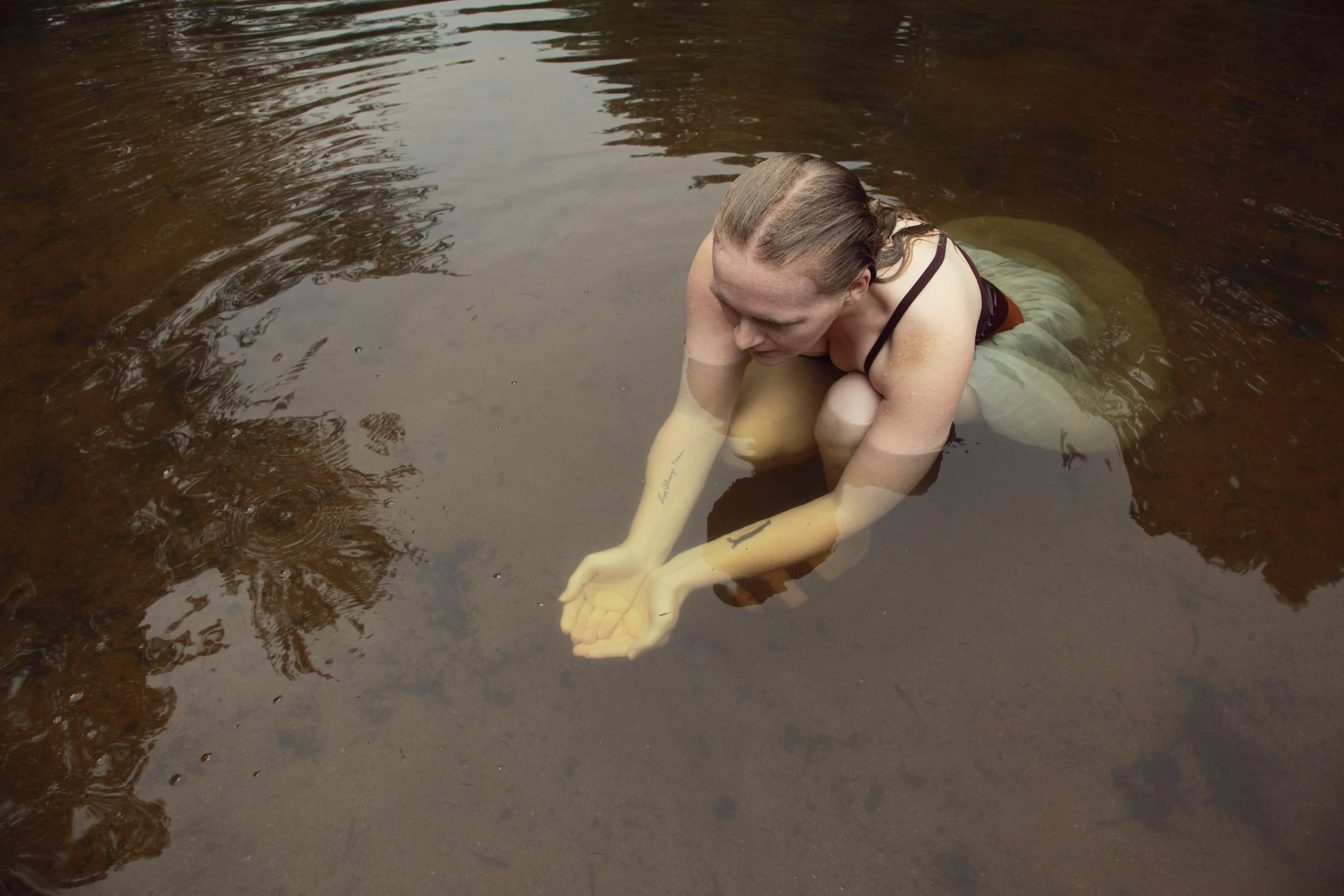
In an eerily similar way, this is how my creativity calls to me now. I know that something is emerging and I am its way in.
Honestly, this is the part of being an artist that I didn’t yet have a framework for — not for decades.
I knew I loved creating. I had ideas and brought them into form. But the deeper layer — the part that asks what, why and how — was missing from my inner landscape. It brings to mind this Jung quote that speaks to the dangers of leaving a void where your own voice should be residing.
“The world will ask who you are,
and if you do not know,
the world will tell you."
Carl Jung
I’ve always been a reflective person, but when it came to creating, there was a large blank space I didn’t yet know how to inhabit — so the world filled it in for me.
Like most Americans, I was raised in a capitalistic culture that teaches us to be consumers, and art is a tangible thing. I was making objects to sell. At the same time, raising children, running a household, and putting food on the table were real and pressing concerns. I also don’t think I was ready — or equipped — to understand what I’m experiencing now.
Like the work we make,
becoming an Artist
is a process with
many stages.
It takes time.
And there is always
more to notice,
more to realize.
For someone who once wanted nothing more than to get there as quickly as possible — to find the formula, make incredible work within a prescribed number of years — it’s quite a turn to discover how much I’m enjoying this gentle unfolding.
The more I uncover, the more I realize how much is already right under my feet — rich, nutritious, alive with possibility, and yet still unknown to me. What potential lives there, in that dark, undiscovered place? I don’t ever want to reach the end of that journey.
I’ve come to see my art practice as an interactive place to learn about myself — a space where I can gently (and sometimes not so gently) witness my inner obstacles and limits at work, and begin making more conscious choices. This way of working is relatively new for me. Over the last five or six years, everything has shifted, and creating art now feels more like a spiritual practice than a job.
That isn’t to say I don’t sell my work — but the engine that drives it comes from a place of self-discovery, not commerce. This, to me, perfectly illustrates the Hierarchy of Allegiances I’ve been exploring recently: the show still goes on, but identifying what’s running the show makes all the difference.
Do you know what’s behind your work?
Have you yet realized yourself as the source from which all of this work will originate and flow?
Your memories, your experiences, your values, dreams, aesthetic choices…these are the building blocks that, when pieced together, begin to show you who you are as an artist and why you chose this path.
You simply cannot make your unique work without having this information.
How This Looks in my Daily Practice
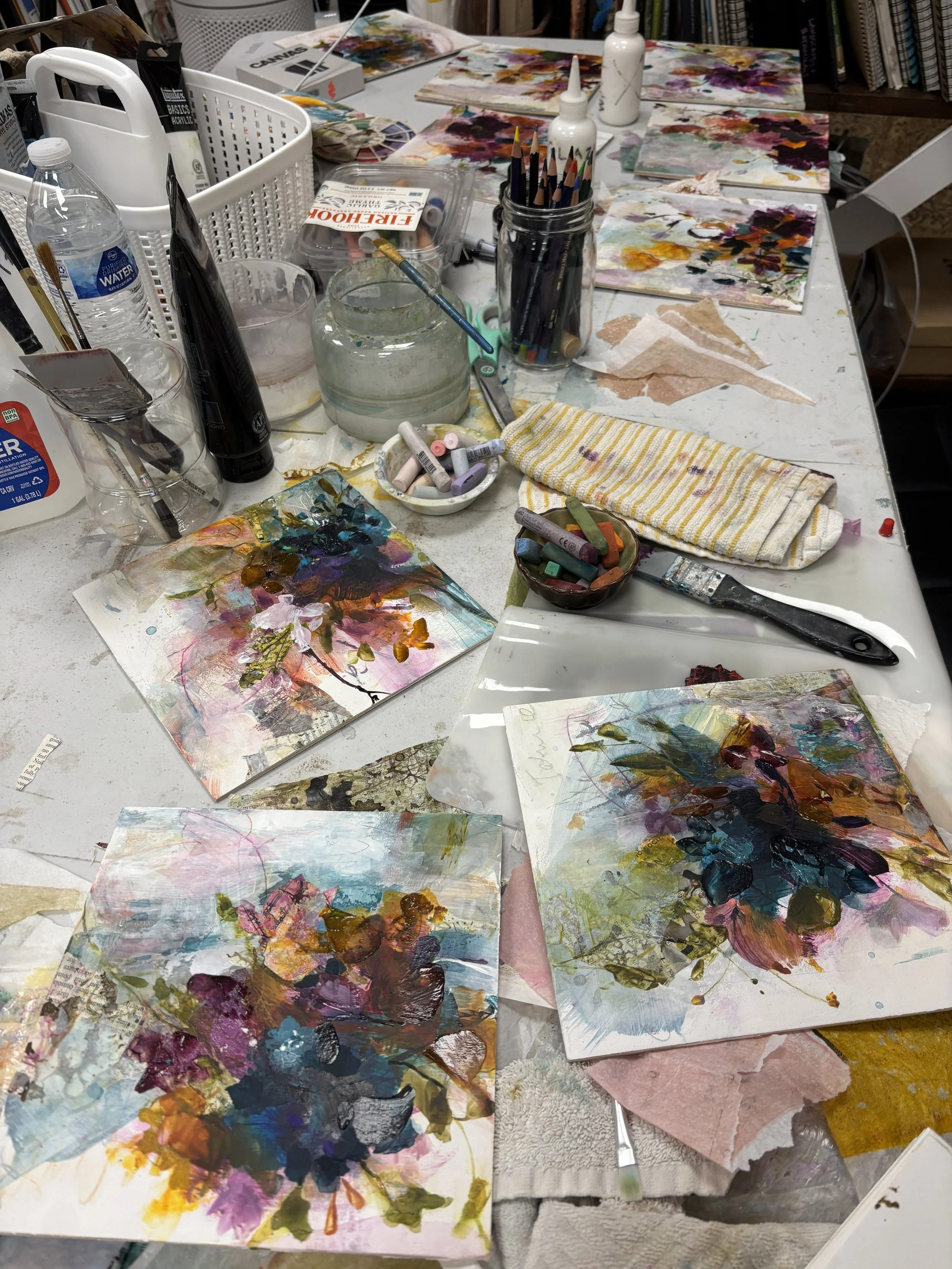
I’m currently working on a new body of botanical pieces, and as I spend time with them, I keep noticing how different this process feels from the way I used to approach new work. The contrast has been meaningful for me, so I’ve shared a few A/B comparisons below to give you a glimpse into that shift.
Before, I would dive in with only a vague, unexamined idea of what I was aiming for. Much of it was influenced by other artists’ work that I admired, so it wasn’t surprising when I couldn’t bring it together into a conclusion that truly felt like mine. I didn’t really have a map, so I had no way of knowing how to course-correct along the way.
Now, I have a defined process for developing new work. I start with specific ideas and characteristics I want to explore, much of it building on what I’ve done before. The result isn’t always exactly what I hoped for, but at least I have a context in which I can see what’s missing or what isn’t aligned with my intention.
In the past, my focus was entirely outward. I hadn’t done the work of exploring the words, feelings, and qualities behind what I wanted to create, so all I ever had was the sense of “this isn’t it” — without any personal understanding or context of what “it” actually was.
These days, I might look at other artists’ work for inspiration, but I focus on breaking down the qualities that resonate with me. This process of collecting “ingredients” helps ensure that whatever I create is entirely my own. External examples become a starting point for uncovering my internal objectives, intentions, and meaning.
When I first started thinking about internalizing the artistic process, it felt completely foreign — and honestly, exhausting. I just wanted to sit down, paint, and have it be beautiful! Is that too much to ask? 😆
If that sounds familiar, here’s some good news: it’s a lot like starting to exercise. At first, it’s awkward, tiring, and the last thing you want to do. But if you keep at it, you start to notice the benefits — and soon, your body even begins to crave it. You feel more energized, and you begin to see the changes that come from doing that work.
This is exactly how this shift feels at first, and then — almost magically — it transforms into the most natural, life-giving way of being and relating to your work. Don’t get me wrong, it still takes discipline to sit down, slow down, and listen to myself, but this is creative work. You are literally building a context in which you can receive information from inside about your work, and that context is driving your process. It's your north star, a constant source of guidance.
So the question really is:
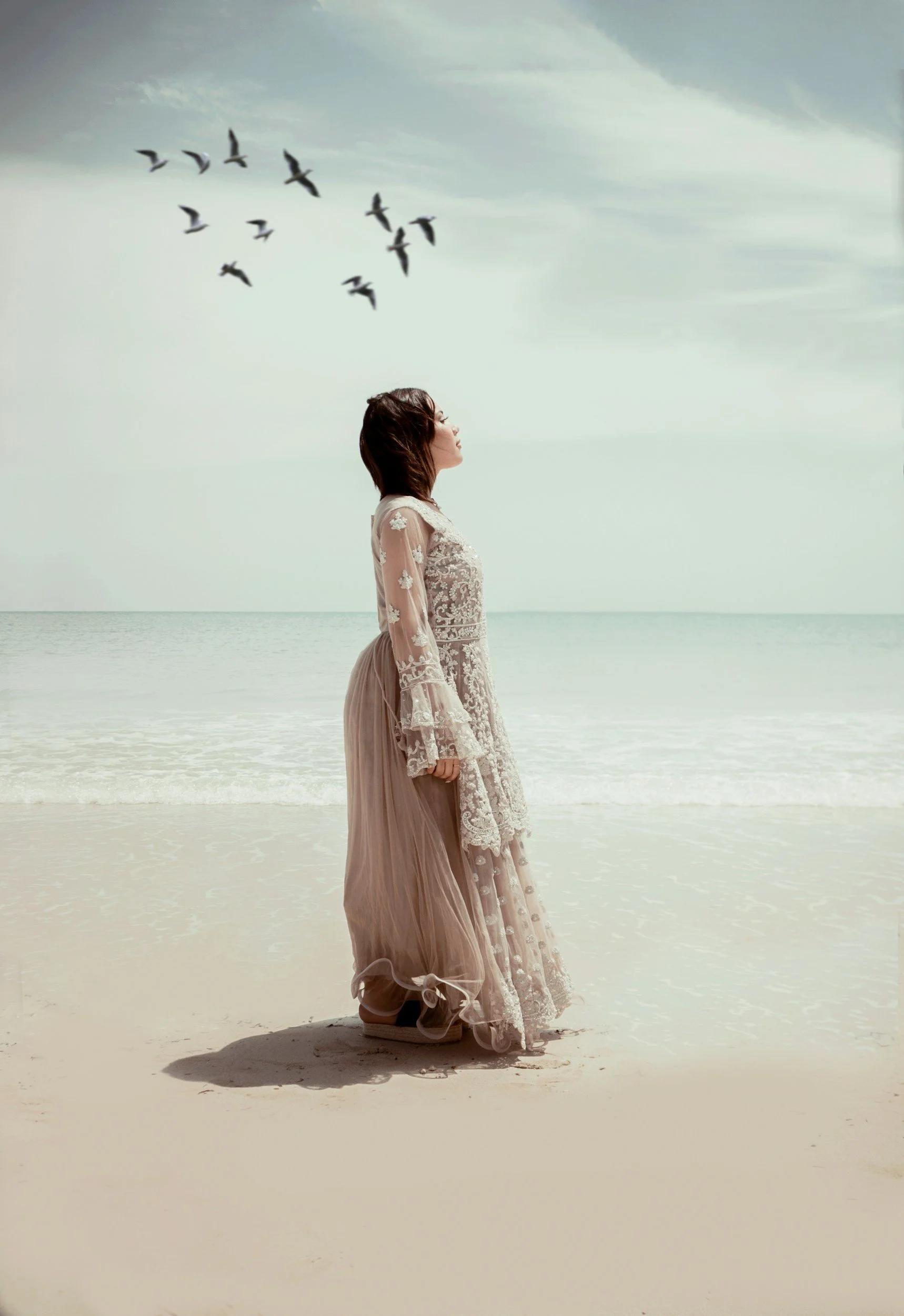
What if you asked yourself the harder questions about your work — the what and the why — and gave yourself permission to truly hear the answers?
No censoring. No judging. Just curiosity, and a willingness to stay open to what already lives inside you.
This could be the beginning of something you’ve been quietly longing for.
What lies ahead for me in the coming days is a notebook I love, my favorite pen, and a series of questions that build on one another. Even though I’ve grown to love this practice — and I know the incredible impact it has on my process and my work — it’s still hard. I still resist it.
But that’s not surprising. We see it all the time in our work: the push and pull, in the right places, creates a more dynamic composition. Creative cycles move in circles, carrying us through vacant beginnings where we feel untethered and aimless, until we gather momentum and find a delicious flow. Eventually, the wave completes, and we find ourselves searching again. It is never stagnant. It is never done. We are always becoming, and that becoming requires this investigative work.
We are, without fail, gaining ground while constantly starting over. We build concepts and processes out of nothing but our own thoughts, ideas, desires, and inspirations. We nurture and develop them until we are emptied out — and after rest, we begin again. Yet we’re never truly starting from scratch. In the ashes of what we’ve left behind are traces to work with, to expand on, to reinvent, to explore further. These small clues hint at what lies beyond, and if we approach them with patience, they have much to tell us: why these colors, why these marks, why this tool or subject matter is important.
We are not flying blind. We have an internal companion — one who has quietly collected all of this knowledge and is more than willing to share it, if we pause long enough to listen.
Putting This Into Your Practice
One way to approach this is to choose a notebook or sketchbook you can devote to the process, then spend some time with a few guiding questions — writing down whatever thoughts arise, and noticing any oppositions that appear. Oppositions carry a bit of magic in them; they ask to be resolved, and often illuminate something essential about your influences, making a ‘third way’ in our habitual binary thinking.
What qualities draw you toward the work of other artists — the ones you return to again and again? Write them all down, even when they seem to contradict one another. Sometimes it’s the tension between opposites that creates the most luminous contrast.
What questions about life feel alive for you right now? Which ones won’t let you go? How might they quietly weave their way into your work?
And then, gently ask yourself: what’s the hurry? Does this need to move quickly? If so, what is asking to be rushed — and why? What might become possible if this process were allowed to move at its own pace?
For myself, I’ll be sitting with a few additional questions:
What qualities from last year’s landscape series want to be carried forward into my botanicals? Where might a quiet throughline already exist between these two worlds.
What values and themes do they share? Is there a common language — a set of ideals — that I can begin to emphasize and develop?
What notes from earlier botanical series are asking to be revisited, as a way of linking past work to what’s emerging now?
How can I deepen my understanding of my love for natural themes? What connections have I not yet noticed? How might I explore the liminal space between loving nature and recognizing myself as a natural being within it?
In what ways does my reliance on convenience and comfort dull my connection to nature, and my understanding of its role in my well-being? And can that awareness become a point of clarity in the work I make?
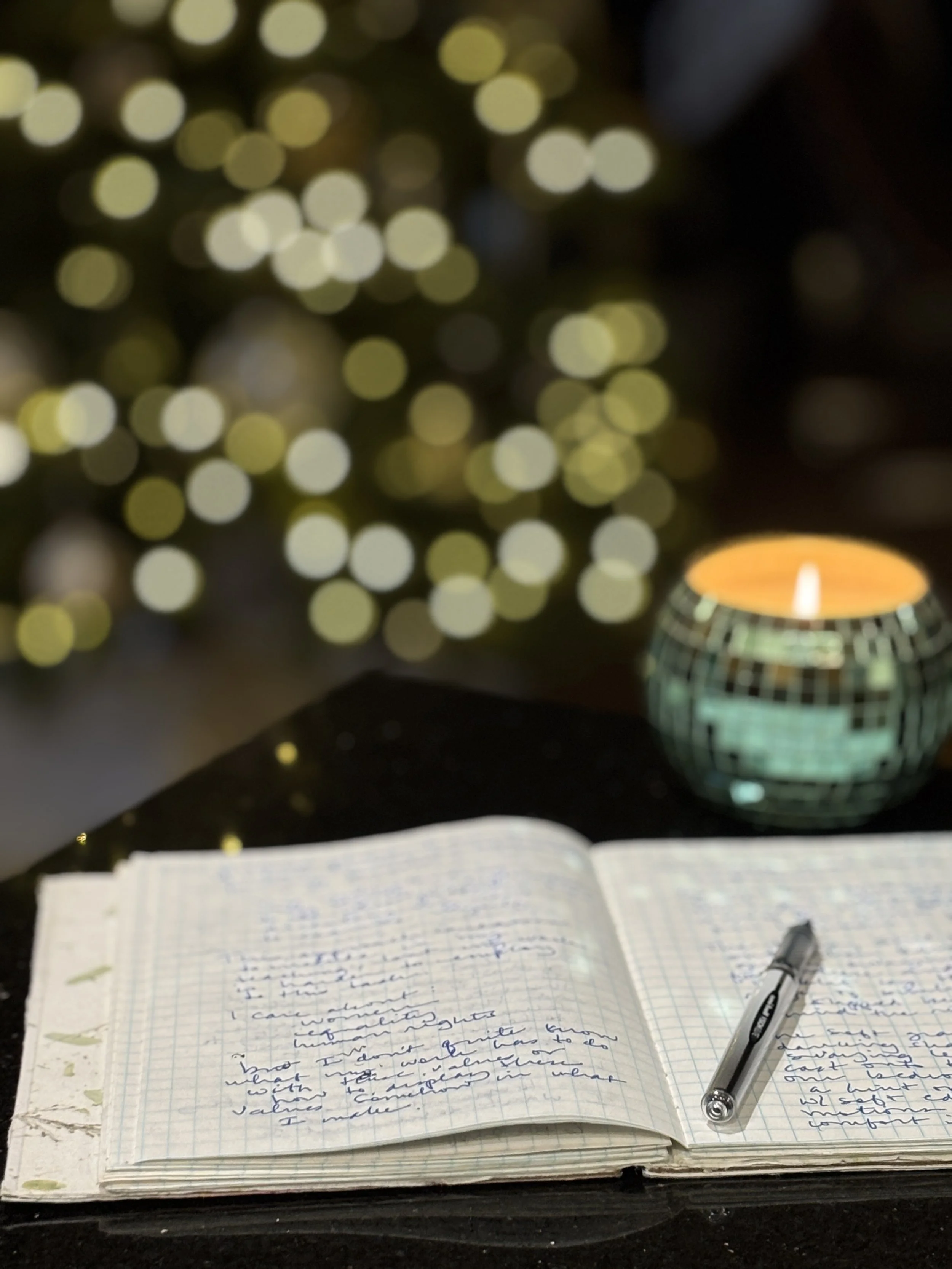
As you can see, the questions we can ask ourselves to deepen our connection to the source of our work are endless.
The insights they offer may feel small at first, but over time they gather, expand, and connect us to the many inner voices waiting to be invited into the process. That kind of participation is invaluable.
Here’s my latest YouTube video, all about creating expressive layers:
If you’re longing for classes that offer both mixed media technique and a deeper relationship with your inner creative voices, you’re warmly invited to join me.